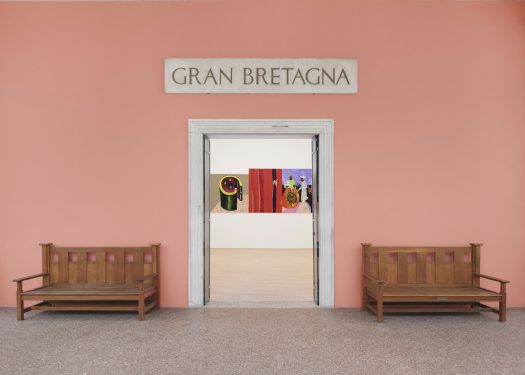
From the outside looking in at the British Pavilion, 2026 Image: Eva Herzog
Mina Kyoleyan talks about her rewarding Fellowship experience
18 August 2026
Venice Fellows represented the UK at the British Pavilion at the international 61st Venice Biennale Art Exhibition whilst developing their own creative and research projects during a one-month residency experience in Venice
The Venice Fellowships programme is a unique opportunity for students to spend a month to fulfil their international ambitions in developing their practice and curatorial skills internationally in Venice during the world’s most important art event. The Fellowship also aims to support students to explore how to work internationally while providing them with a platform to engage with the Venice Biennale to research and develop new connections with curators, critics, artists, and professionals working cross the UK and internationally.
Manchester School of Art is a partner institution in the British Council’s Venice Fellowships programme. This distinctive Fellowships opportunity offers the Fellows to have the chance to conduct their independent research in and around Venice and enhance their current studies and professional practice alongside other creative students and professionals from 40 UK Higher Education Institutions.

Mina joined us in this interview to talk about her residency experience as well as her academic experience with her studies, conducted by Dr Gulsen Bal, Programme Leader in MA Contemporary Curating.
Could you please tell us about yourself and your experience with your academic studies on the MA Contemporary Curating programme at Manchester School of Art?
Originally from Bulgaria, I relocated to Rome to begin my university education with the clear intention of pursuing a future in curating. I completed a BA in Art History with a minor in Art and Design from John Cabot University. During this time, I became part of the curatorial team of 4m2 Gallery – a student-led exhibition space that hosts semestrial projects inviting local artists to present their work. This experience introduced me to the organizational and logistical dimensions of exhibition-making and gave me a valuable insight in working with artists and building effective curator-artist dynamics.
My undergraduate studies helped me build a strong and versatile skill set. The programme focused on close visual and contextual analysis, archiving, and extensive research practice. It also provided a solid foundation for my research interests, which centre on cross-cultural relations, spatial influences, and psychological issues related to identity formation, estrangement, and melancholy. Diving into my Master’s, I was prepared to continue developing
these interests and gain on-hands experience in the curating process.
The MA Contemporary Curating programme at MMU allowed me to critically evaluate and appreciate the skills that I have acquired during my undergraduate studies and challenged me to apply them within professional contexts and larger projects. My research focus centred on the figure of the stranger and expanded into an interest in travelling exhibitions and the ways their impact shifts according to local context. My engagement with the course gave me the time and structure to develop my curatorial voice and prepared me to enter the contemporary art sphere with confidence.
Candidates are selected through a competitive application process… So, can you tell us about your research project and what motivated you to apply for this specific international fellowship?
My project, titled “ghosted”, centres on the universal experience of feeling like a stranger in both new and familiar environments, and on how people negotiate belonging in everyday life. The “In Minor Keys” conceptual framework of the 61st edition of the Venice Biennial reflects my curatorial research on estrangement, mobility, and identity formation. Current global conditions, where borders appear increasingly fluid while belonging feels increasingly fragile, provide an important context. Many young people move across countries with ease, yet the sense of “home” often remains fragmented or provisional. This project addresses this tension by creating a platform where such experiences can be recorded and recognised.
My motivation to apply for the Venice Fellowship was rooted in a long-standing desire to engage directly with the Biennial. It is the most significant contemporary art event globally, and the opportunity to contribute to it was immediately compelling. The Fellowship allowed me to observe how a large-scale art environment is created and sustained, and it offered the privilege of developing my own project within this context.

What are the benefits of spending a month in Venice during the world’s most important art event, and what did you hope to achieve through this unique fellowship opportunity?
Spending a month in Venice during the world’s most important art event offers an environment that I have never seen before. The city becomes fully saturated with artistic activity, and you are constantly surrounded by exhibitions, performances, conversations, and parallel events. This atmosphere is extremely stimulating, inspirational, and fulfilling.
I approached the Fellowship as a potential career milestone that could open future opportunities, but it became much more than that. The experience gave me insight into the organisational structure of the British Pavilion and helped me understand the significance of national representation within the Biennial. I was also directly engaged with the visitor experience, and this practical involvement allowed me to refine my understanding of how audiences navigate a space and how their encounter with the work can be impacted by numerous factors.
The biggest benefit that I got was the opportunity to speak to so many like-minded people and draw inspiration from the atmosphere. I had time to explore Venice independently, which helped me reflect on my direction and understand how I want to develop my practice. Venice gave me a defined path that I am ready to follow.
Has there been a formative and inspirational experience? Also, how has this impacted your curatorial thinking?
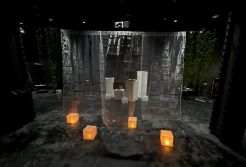
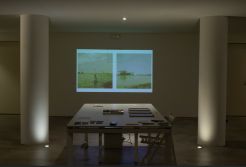
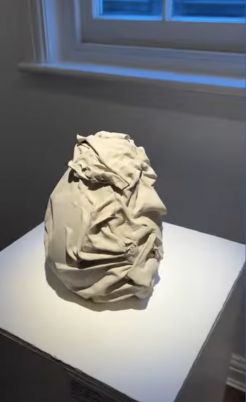
The most inspirational experience during my time in Venice was the complete process of developing my curatorial project. I invited artists from my fellowship group to respond to the theme, and their contributions opened perspectives on estrangement that I had not considered before. I encountered the significant challenge of securing an exhibition space during the first month of the Biennial, yet the project ultimately came together in the best way possible by opening on the ground floor of the British Pavilion. Curating this exhibition on my own taught me how essential clear communication is and how important it is to build stable, supportive relationships with the people you work with.
As the project “ghosted” is conceived as a travelling exhibition, the experience in Venice sparked a deeper interest in how exhibitions shift and evolve according to local context. My research on the impact of transitional exhibitions and how they open conversations between distinct cultural settings is now incorporated as part of my MA Major Project. I see this curatorial form as a way to connect multiple world contexts within a single trajectory, and I am determined to develop this method further in my practice.